hello world!
I am back, I think its time I start blogging again. I think its been almost 10 years and out if the blue, I've been inspired to reconnect.
I have many stories, have traveled all around the USA to many different hospital systems, met plenty of doctors across different specialties, and shared the frustrations of the many.
With the rise of corporate medicine, capitalism driving the priorities of how hospitals and clinics are managed, funded, reimbursed, and run... the gift of being a provider of medicine has been lost on me.
The gift now lies in learning to take proactive step to avoid ever needing the medical system.
Financial health translates into physical health outcomes, and sadly if to make a dollar means taking a dollar away from funding housing, healthy food options, transportation, and community reaources, then, sadly I have to say that medicine has lost its way.
Now in 2022 we have more physician employees than business owners, with large institutions raking in billions of $ per year, and frankly physicians have allowed this to happen on their watch, giving control of the practice of medicine to the greedy capitalists.
All hope is not lost, but we must identify and diagnose the problem before attempting to become professionals practicing treatments for the problem.
So with that, I hope to come back and bring some new content, hopefully sooner than later... take care and be well!
Wednesday, October 5, 2022


Thursday, January 25, 2018
Feedback / Update Dr. Muggle 2018
 Greetings all!
I would love to know what problems you face, and what advice or questions you have now that it is 2018.
It has been a while since I have posted here, but I believe most of the content here is still helpful.
Please send me some feedback, comments, and questions. I would love to add more content, or more useful content, or update anything that needs it, but I need to know what is high yield for you.
Post below in the comments!
Cheers!
Doctor Muggle
Wednesday, June 4, 2014
PD KIT and Books/Advice for each Term - Use the Tabs Above! Thank you!
- Welcome To Doctor Muggle!!
- In the Right Margin: "Popular Posts" and "HELPFUL LINKS", found below. Links directing you to sites with Practice Questions/Organized notes/Flashcards resources, etc. Check it out!
- A good place to start => GENERAL MEDICAL SCHOOL ADVICE - Two Advice Points -
- Amazon.com - Please use my site to find what you need for school on amazon, I do not explpoit anybody! I have written everything here to benefit you, and I spend a bit of time putting this together. However, if you do click through my site and order through amazon it helps me, no expense to you! If you took the time to click through my site, This is how you can say thank you, and I thank you.
- Bookmark and Share Muggle! You can also feel free to make comments or send me an email.
Tuesday, February 11, 2014
Interview Advice - Kaplan Program Director Panel
 For those of you gearing up for 4th year, you should check out these videos Kaplan released. A detailed interview with some primary care program directors.
Now remember these are NOT opinions shared across the board of all program directors (there are exceptions) but I think this is pretty representative of most (and should be your guide). There are a lot of feelings expressed here that are important to your application. You should keep these all in mine as early as the beginning of 4th year because you start building your list of letters and your match appplication. These facts and myths need to be clear as you go on and get into interview season and finally, the match. Click on over, they are long videos so clear an hour or two, but it is well worth your time.
http://www.kaptest.com/Medical-Licensing/Med-Promos/Residency-Series-Residency-Program-Director.html?om_rid=NskZvV&om_mid=_BSfQsRB82SWf56 Cheers and good luck!
Wednesday, October 9, 2013
Step 2 CS - Failed/No Pass - How to study/What to do - help USMLE Clinical Skills 2013
Many more students are not passing the USMLE Clinical Skills exam, as the ECFMG have recently in July 2013, increased the passing standards, targetting especially Foreign Medical Graduates. As someone who has witnessed first hand a repeated experience with this exam, I can provide a unique view of how to deal with this test.
- First and foremost, realize that US Grads have an advantage since a lot of programs provide patient actor feedback since year 1 of medical school! So they are 2 years ahead of you if your first clinical experience is in 3rd year. If your school has lacked this type of training, it would be wise of you to bone up on some basics. https://www.youtube.com/watch?v=RckmVLdHKtk
- You MUST read the USMLE Step 2 CS official handbook http://www.usmle.org/step-2-cs/ and well, read the whole thing, but more specifically, read two very important sections towards the back of the pdf. Here's the 2013 Pdf link: http://www.usmle.org/pdfs/step-2-cs/cs-info-manual.pdf
- 1) Read the grading requirements for the ICE, CIS, and SEP English Proficiency portions
- 2) read the Patient Note instructions/examples. ***(Pages 12, and pages 17-21)***
- Understanding the grading criteria is really the most important advice I can offer. This is a 3 part exam, and if you fail ANY ONE part of it, you DO NO PASS the whole thing. Remember this fact througout your practice/studying for it. You must be adequate in all three areas, in order to pass this exam. For example, focusing on getting a perfect patient history, while neglecting patient care/empathy (the CIS) requirements will fail you. Taking a half thought out history, and writing just an OK note while making the patient feel relatively comfortable (although this sounds like you're not using the best clinical work ethic), WILL PASS you. This is NOT the image you want to see.
 btw you are also given a visual "xxxxxxx" score breakdown in the traditional NBME score reporting style, but it offers NO specific feedback. This is as much feedback as you get.
 - This is an expensive exam, about $1400, plus hotel fees, plus transportation, plus flights... Taking this exam twice is twice as expensive. It might be a deal breaker for some of you!
- For some reason, and this may not turn out to be true, but the Philidelphia testing center has seen more failures according to forum posts and word of mouth. This was the original, and only, Step 2 CS testing center and whether it recieves more strict patient actors, requirements, or more highly trained US Grads, or if its just a fluke, I would advoid this testing center if possible. If not, just don't let this hoopla cloud your judgement. As much wiggle room as there is in the format of this exam, it really is pretty standardized, and I can attest to that having taken the exam months apart at different centers. My experience was essentially the same.
- Look up the testing periods and the respective Score Reporting periods to make sure you have your score in time for interviews. For me, I took first in April, and by that time all slots are booked until November. There are mailing lists on the OASIS website that can email you when spots are freed up by someone who cancells their spot. You must be in good practice, and ready to go at the drop of a hat and ready to book a last minute flight as well, in case you have to retake. I retook in Late August, and recieved my score in October in time for interviews.
- This brings up a big point, take the exam as early as you are ready to do it. Because, if you don't end up passing, you will need to A) re-register, B) re-pay for the exam, and C) re-schedule the exam during a time which may be incredibly booked.
- PS, taking an EMERGENCY MEDICINE or outpatient FAMILY PRACTICE elective where you are taking patient histories solo, you should really do this before taking your exam. Taking OBGYN and PEDS also are hugely helpful since you will definately get a case from one or both these specialties.
- Look at the programs you are applying to for residency. Many do not care if youve taken CS or not, so why risk it? Many of them want you to pass the exam before you start on day 1 of your residency. You can STILL MATCH!!
- Don't bother with a score re-check, especially if you did not pass the CIS portion. There is no reviewing of your performance, only re-tallying the check boxes in case someone miss counted, which is highly highly unlikely.

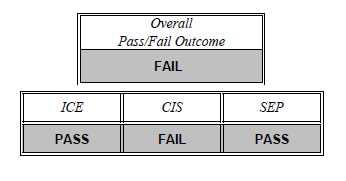
***UPDATE***
- If you took ANY USMLE Exam late, and you finally recieve your score/results, and it is AFTER you have already submitted your ERAS Applications... you must go back to eras and to the Transcript section and CLICK RE-SUBMIT!!! Otherwise your new scores will not be included in your application, this applies to Step 2 CK AND CS.
If you do not pass the exam, there will be limited information online, you can scour the internet full of super-negative reports from (mostly) FMG/IMG's who didnt pass for whatever reasons, and this will scare you. You will get little sympathy from the ECFMG or the USMLE and you may feel abandoned. You will feel miserable, full of self-doubt and contempt for the ECFMG and contemplate giving up medicine maybe, you might feel inadequate, and finally, ISOLATED. You might be embarrassed to mention this fact to anyone, especially your colleages in fear of being looked at as unfit to practice medicine.
Well DON'T. I have a better way to look at it.
- First and foremost, stop using the word FAIL. From now on, you will use the words "NOT PASS". You must find positivity in this experience and prevail, both for your future career, your mental health, and for your Interviews!! You must explain your experience in a positive light eventually to someone who can see your transcript. So wipe all that negativity out of your head and accept it. You did not fail, You simply did not pass, this time.
- Next, you need to do some self-evaluation. What portion of the exam was weak? Go back and review the grading criteria for that section, and try to remember what your testing performance lacked. Be objective, but not super critical of yourself. You are capable, and have the opportunity to improve yourself! If you had barely passed with a borderline score, you wouldn't have taken this time to better your bedside manner and clinical skills!
- Third, try to find out if anyone else in your situation didn't pass, and try to have a discussion with them. Work out your frusterations, and concerns, and work together to persevere. You might not want to practice with this person, as they won't be a good partner, no offense to them, but you need someone who knows how to pass. Wish them luck in their journey in your struggle.
- Practice with a stranger. Online dating is actually a pretty awesome avenue here... Find someone who doesn't know you, who is coming ready to judge you in their first impression of you. Do a case with them! Get honest feedback! This will be SUPER valuable for you, and maybe you'll find love too. Or just find a friend who's not in the medical field.
- Practice writing the note out in the format that is described in the official handbook. Focused note. No findings that don't entertain any of your differential diagnosis. Only pertinent information. You are trying to prove to another physician that you were thinking 3 differentials, and that you were trying to rule them in or out with your questioning and exam. Thats it. No fluff or excess Rewview of systems or exam findings that have nothing to do with that just because you were trying to look like you do a thorough job. You want your note to tell a story titled, "what were you thinking was going on?" ... not "I decided to do everything under the sun and look really thorough and maybe if I do that, ill hit some pertininent postitives and negatives that I can use". You want your grading MD to say in his/her head "ah... i see why they did that, and ah I see why they included that, they must have been thinking about ____ diagnosis".
- In terms of your english skills, just check in with the patient! That's one of the criteria in the grading in the official handbook anyway, which you should be doing even if you have perfect english. BUT, if you have limited english skills, all you need to do is constantly ask "Do you understand what I mean?" and if they say no... then explain a different way until they do! That's good medicine! Who cares if you don't have a textbook vocabulary. If the patient understands you, thats all that matters.
- Finally, Don't take this exam as a measure of your ability to be a doctor. IT IS NOT. It is a hoop you must jump through to pass to the next stage. No one works under the stress of getting everything correct the first time, without time to correct any mistakes. In Medicine there ARE second chances, there are colleagues with which you can discuss clinical gestalt and judgement, AND you have more than 20 minutes to evaluate and document a patient case and explain to the patient whats going on with them. If doctors worked at the pace of the Step 2 CS exam, we would have the most effieient doctors in the world! In the real world, ideally it would be great to work like this, but its just not this way. I think you know this is true already. Remember, it is just an exam, to see how you perform under stress.

I don't know what else to say at this point.
Overall, the whole process, even just taking it one time, is stressful enough. Prepare yourself by knowing the format of the exam, the grading, and practice with someone who can evaluate you using the official step 2 CS grading criteria. Make it realistic, and do the same thing with your actual patients in your clinical clerkships and see how they react to you.
I wish you all the best of luck and that you may prosper with your careers.
Tuesday, July 2, 2013
USMLE Step 2 CK "free 150" Questions - 2013 +USMLERx
 Like for Step 1, Step 2 CK has a handbook, which you should be aware about, and it contains a 3 block - 131 question exam at the end with answers. Some people call this the "Free 150", i think, unless there is another exam I am unaware about. But this exam is OFFICIALLY released by the USMLE on their website and you shouldn't neglect it.
Here you go!
And great luck!
http://www.usmle.org/pdfs/step-2-ck/2012--13_FINAL_S2_GSI.pdf
If this link doesn't work, try going and clicking the "handbook"
in the right margin HERE.
http://www.usmle.org/step-2-ck/
Same thing. Cheers!
 Also! USMLE Rx offers a 20 question Free trial of their question bank (and so do others... but its a nice little review quiz for Step 2CK material... here is the link:
http://m.qmax.usmle-rx.com/user/testdrive.aspx?step=2
Saturday, June 1, 2013
Step 2 Study Prep - Brian Jenkins Authors Step Up - DIT - New Book! April 2013
For those who criticized DIT for Step 2 in the past, Brian Jenkins, the brain behind the DIT USMLE Review Courses has co-authored the newest version of the Step up to Step 2 book, which is the book the review course follows. Just like how DIT step 1 followed First aid... its nice to have a resource to follow allong with, otherwise it just doesn't give you full learning potential.
I haven't gotten a chance to review this new book in person yet, but I will be headed over to the library today to check it out. Will add criticisms accordingly.
Here has been my assessments in the past about the different books available for Step 2, there are a lot of them and all slightly different.
http://www.doctormuggle.blogspot.com/2012/12/first-aid-2013-basic-science-rotations.html
A lot of people are using the Step up to Step 2 book, so hopefully it Steps up to its own expectations. ha!
in the meantime... here it is!
I haven't gotten a chance to review this new book in person yet, but I will be headed over to the library today to check it out. Will add criticisms accordingly.
Here has been my assessments in the past about the different books available for Step 2, there are a lot of them and all slightly different.
http://www.doctormuggle.blogspot.com/2012/12/first-aid-2013-basic-science-rotations.html
A lot of people are using the Step up to Step 2 book, so hopefully it Steps up to its own expectations. ha!
in the meantime... here it is!
Tuesday, May 14, 2013
SpeedUp Light - Play podcasts, MP3s, and Goljan or Conrad Fischer Faster on your Phone!
This app allows you to increase the speed of your MP3's loaded on your phone/device all the way up to 2.5X.
Now you can listen to Goljan, or Conrad Fischer, or your favorite podcast, or study tool at the most efficient speeds while you are on your commute to and from where ever you are going.

Its Free, and its called SpeedUp Light.
Enjoy!
Now you can listen to Goljan, or Conrad Fischer, or your favorite podcast, or study tool at the most efficient speeds while you are on your commute to and from where ever you are going.

Its Free, and its called SpeedUp Light.
Enjoy!
Subscribe to:
Posts (Atom)