so far, I am in the process of shelling out >$800 for the registration and determining the best resources to use during clerkships so that I am familiar with 1 book full of my notes come study time. I don't have much time to dedicate outside of work to study, and it would be nice to do this efficiently.
So far, there are some EXCELLENT reviews on this forum, of a guy who got 260's, and another who got 206. They describe very much in detail how they studied and what they studied, and it really shows the two extremes that you can take in order to pass Step 2.
More to come later... for now... read these. Goodluck!
http://www.aippg.net/forum/f26/my-step-2-ck-104325/
Tuesday, January 8, 2013


Monday, December 31, 2012
SGU PD Kit Amazon Links - Save yourself some $$$ *updated*
+ Everything you need for your SGU PD KIT in Term 2 and term 4/5 + beyond. These are the main items. + Despite what your medical school tries to sell, you DO NOT need to get the School kit for $800+. You can save hundreds of dollars and buy yourself a nice trip to Barbados instead. + Remember, these instruments are for Practice/Learning, not clinical practice. Many of these items will be provided to you in hospital/clinic, and you won't be required to carry them around. Even for Step 2 CS and OSCE exams, they are provided to you. If anything, get a nice stethoscope and penlight (the two things you will carry with you everywhere you go). + If you'd like a Quality Otoscope/Opthalmoscope than the ACD, go with Welsch-Allen, (posted below). It magnifies what you're seeing better, but it will cost you. Still, Amazon will save you a hundred bucks. There are two cheaper options, the ADC and Welch Allyn, they work well enough, but lack things like different colored lenses (which they don't teach us to use), and a slightly dimmer light compared to the Welch. I have this and it works fine. + The automatic BP Cuff by ACD is really easy to use compared to the old school EMT type cuff too near the bottom, most hospitals/clinics will have the old school type. + The stethoscope you choose needs a diaphragm and a bell, like the Littmann. +All in all, you are learning technique, and most of the time your tutors will supply these things for you, these are mostly so you can practice on your own. Some people borrow a friends for the few exams you need them for in term 4, but it looks like most people bought their own. + Happy Shopping!
+ There are many styles of "Doctor Bags" in case you want something suited for your style. +Also, the penlights, BP cuff, and Reflex hammers all have multiple colors if that suits your style and you want to match scrubs.
<-- +Here's a link to the Quality Welsch-Allyn Otoscope/Opthalmoscope
(Still Cheaper than SGU website). I actually reccommend this one if you plan on using it in the future (beyond medical school)
+Don't Forget Extra Disposable Specula! You'll need more of the larger ones (4mm, **Latex-free are posted down below - Especially for the ACD kit. (btw, the 2.5 mm are more for children)
+Here's the tourniquet you need btw, if you want to get it, again this is one of those items you don't need because it's usually supplied, but if you insist its gotta be big enough for your thigh.
+ This pocket chart (although not snellen, has a RULER on the side, super useful to measure JVP. . .
*** THE PANOPTIC WELCH ALLYN OPTHALMOSCOPE IS SO GOOD. I came across this in clinical practice and I swear, you can finally see the whole eye in a circle like the textbooks!!
~~~~~~~~~~~~~~~~~~~~~~~~~~~~~~~~~~~~~~~~~~~~~~~~~~~~~~~~~~~~~~~~~~~~~~~~~~~~~~~~~~~~~~~~~~~~~~~~~~~~~~~~~~~~~~~~~~~~~~~~~~~~~~~~~~~~~~~~~~~~~~~~~~~~~~~~~~~~~~~~~~
+IPHONE/GADGETS!! I am excited to announce some nifty products for those who like using new technology!! This is the medicine of the future people, start getting used to it + check it out!
+ There are many styles of "Doctor Bags" in case you want something suited for your style. +Also, the penlights, BP cuff, and Reflex hammers all have multiple colors if that suits your style and you want to match scrubs.
<-- +Here's a link to the Quality Welsch-Allyn Otoscope/Opthalmoscope
(Still Cheaper than SGU website). I actually reccommend this one if you plan on using it in the future (beyond medical school)
+Don't Forget Extra Disposable Specula! You'll need more of the larger ones (4mm, **Latex-free are posted down below - Especially for the ACD kit. (btw, the 2.5 mm are more for children)
+Here's the tourniquet you need btw, if you want to get it, again this is one of those items you don't need because it's usually supplied, but if you insist its gotta be big enough for your thigh.
+ This pocket chart (although not snellen, has a RULER on the side, super useful to measure JVP. . .
*** THE PANOPTIC WELCH ALLYN OPTHALMOSCOPE IS SO GOOD. I came across this in clinical practice and I swear, you can finally see the whole eye in a circle like the textbooks!!
~~~~~~~~~~~~~~~~~~~~~~~~~~~~~~~~~~~~~~~~~~~~~~~~~~~~~~~~~~~~~~~~~~~~~~~~~~~~~~~~~~~~~~~~~~~~~~~~~~~~~~~~~~~~~~~~~~~~~~~~~~~~~~~~~~~~~~~~~~~~~~~~~~~~~~~~~~~~~~~~~~
+IPHONE/GADGETS!! I am excited to announce some nifty products for those who like using new technology!! This is the medicine of the future people, start getting used to it + check it out!
- Iphone Pulse Oximeter adapter!
- Iphone blood pressure cuff adapter!
- USB Otoscope + portable veinfinder
- *soon there will be otoscope/opthalmoscope adapters + Ultrasound adapters for Phones!
- also, Check out this Free App you can use to measure your heart rate --> FREE HR App - it tracks the fluctuations of color in your fingertip as it is perfused with blood with each heart beat, giving you a waveform and surprisingly accurate heart rate.
~~~~~~~~~~~~~~~~~~~~~~~~~~~~~~~~~~~~~~~~~~~~~~~~~~~~~~~~~~~~~~~~~~~~~~~~~~~~~~~~~
~~~~~~~~~~~~~~~~~~~~~~~~~~~~~~~~~~~~~~~~~~~~~~~~~~~~~~~~~~~~~~~~~~~~~~~~~~~~~~~~~


Saturday, December 29, 2012
Clinical Years Study Step 2 CK/CS and Pocket Books Y3 - Rotations
Start with Scrubs and White Coats:
http://www.scrubsandbeyond.com/Student-Scrubs-Labs-and-Clinical-Coats.html
adding more sources later...
Also, check your local Google searches for Medical Uniforms Stores and go try it on in person. I found my first experience interesting since there are so many types of brands of scrubs and white coats and styles. If you want to shop around.
For your White-Coat:
FOLDABLE POCKET CLIPBOARDS

Retractable Badge Clip - really nice to have
Pocket Books and Books to Master the STEP 2
http://www.scrubsandbeyond.com/Student-Scrubs-Labs-and-Clinical-Coats.html
adding more sources later...
Also, check your local Google searches for Medical Uniforms Stores and go try it on in person. I found my first experience interesting since there are so many types of brands of scrubs and white coats and styles. If you want to shop around.
For your White-Coat:
FOLDABLE POCKET CLIPBOARDS

Retractable Badge Clip - really nice to have
Pocket Books and Books to Master the STEP 2
NEW! First Aid 2013 - Basic Science, Rotations, Step 1 + 2 - Resource 2013
STEP 1:
The new FA Step 1 book is out! I'm not sure how different this version will be compared to the 2012 version, as the 2012 edition had many differences with the previous ones, including color. Overall, most of these dating back to 2009 are more or less identical, but they do make some changes that reflect the updates to the USMLE content, year to year. With the recent changes to the percentage of clinical-natured of the questions and the updates to the CS exam format emphasizing more clinical understanding, it would be wise to attain a newer version, as these changes have been implementing over the last couple years. Good luck!
STEP 2 CK and CS:
There is so much discussion about what book is the best resource. There are so many choices as well. Now. I have read several forumn, book reviews, etc and I still have problems, as most of these books are constantly updating to new editions.
This is what I have understood so far. In terms of being most comprehensive First Aid Step 2 CK (8th) > Step Up to Medicine (3rd) > Master the Boards (2nd). So, really it depends on what one book you want to spend time taking notes in and reading. Keep in mind for Kaplan videos, again they seem to be too comprehensive and time consuming assuming you really learned nothing during clinicals and step 1, and DIT seems to be less helpful compared to Step 1 course. This may be due to the fact it follows Step up to USMLE Step 2 book instead of the comprehensive book, and people have complained over and over about this, and thus abandoned Step 2 DIT course. However, there is a new edition of this book being released in April 2013, which may Change the way people feel about this resource. Finally, First Aid Boards and Wards (5th), is a pocket book, that really captures what you need to know about each specialty, from the perspective of someone in a different specialty. They tried to put surgery in terms of an internist, and pediatrics in terms for a surgeon. So it really helps a breadth of individuals whatever your strengths are and should help you in the Shelf exams and pimping, and Step 2.

From my experience, the Step Up to Medicine (3rd) is the best complete resource so far. Although, I dont think it covers surgery or obgyn in quite the detail it deserves for your core rotations, but it covers the high yield information for the Step 2 CK, as those topics aren't quite as massive sections as is Pediatrics and Internal Medicine. Others seem to agree.
 ****For other Clinical Pocket books, resources, clipboards, and helpful items for Clerkships in 3rd and 4th year, check out this article: http://doctormuggle.blogspot.com/2012/07/test.html
*****For Tablets that will fit in your lab coat, check out this article:
http://doctormuggle.blogspot.com/2012/11/update-for-clinical-medical-student-3.html
The new FA Step 1 book is out! I'm not sure how different this version will be compared to the 2012 version, as the 2012 edition had many differences with the previous ones, including color. Overall, most of these dating back to 2009 are more or less identical, but they do make some changes that reflect the updates to the USMLE content, year to year. With the recent changes to the percentage of clinical-natured of the questions and the updates to the CS exam format emphasizing more clinical understanding, it would be wise to attain a newer version, as these changes have been implementing over the last couple years. Good luck!
STEP 2 CK and CS:
There is so much discussion about what book is the best resource. There are so many choices as well. Now. I have read several forumn, book reviews, etc and I still have problems, as most of these books are constantly updating to new editions.
This is what I have understood so far. In terms of being most comprehensive First Aid Step 2 CK (8th) > Step Up to Medicine (3rd) > Master the Boards (2nd). So, really it depends on what one book you want to spend time taking notes in and reading. Keep in mind for Kaplan videos, again they seem to be too comprehensive and time consuming assuming you really learned nothing during clinicals and step 1, and DIT seems to be less helpful compared to Step 1 course. This may be due to the fact it follows Step up to USMLE Step 2 book instead of the comprehensive book, and people have complained over and over about this, and thus abandoned Step 2 DIT course. However, there is a new edition of this book being released in April 2013, which may Change the way people feel about this resource. Finally, First Aid Boards and Wards (5th), is a pocket book, that really captures what you need to know about each specialty, from the perspective of someone in a different specialty. They tried to put surgery in terms of an internist, and pediatrics in terms for a surgeon. So it really helps a breadth of individuals whatever your strengths are and should help you in the Shelf exams and pimping, and Step 2.

From my experience, the Step Up to Medicine (3rd) is the best complete resource so far. Although, I dont think it covers surgery or obgyn in quite the detail it deserves for your core rotations, but it covers the high yield information for the Step 2 CK, as those topics aren't quite as massive sections as is Pediatrics and Internal Medicine. Others seem to agree.
(2).png)
*****For Tablets that will fit in your lab coat, check out this article:
http://doctormuggle.blogspot.com/2012/11/update-for-clinical-medical-student-3.html
Sunday, November 25, 2012
Update for Clinical Medical Student 3 - White Coat Tablet - Ipad Mini, Nexus 7, Kindle Fire
Having a tablet that fits in your lab coat... Priceless.
Having charge and reception on your phone.... priceless.
Having a lightweight library of review books, question books, and medical texts, as well as Uptodate, Medscape, and netters anatomy in your pocket... More than priceless.
I suggest you look into the Nexus 7, Ipad Mini, Amazon Kindle Fire HD.
These are your mainstay products that fit in your pocket, are powerful, fast, longlasting battery life, and support a lot of the apps youll need and want. Nowadays, all the apps like Prognosis and Medscape and Casefiles are universal for all. The Ipad is priced a little higher... of course, but really the difference is the iOS vs Android vs Amazon Google Store. The Nexus 7 on Android is the cheapest and really will be the envy of your clinical group, if you need something on a budget, which most of us are.
Having a smart phone or tablet is priceless... you may want to consider a phone or tablet. I love having an iphone to look up abbreviations, diseases, surgical procedures, anatomy, etc... during rounds and lectures... but also, It would be nice to have a "dumb"-phone with a superior battery life and cell reception because hospitals are notorious for having terrible dead spots. And when someones trying to get ahold of you for whatever reason, it can be quite frustrating, assuming you dont have a pager, or your pager battery dies, which happens.
Goodluck!
Having charge and reception on your phone.... priceless.
Having a lightweight library of review books, question books, and medical texts, as well as Uptodate, Medscape, and netters anatomy in your pocket... More than priceless.
I suggest you look into the Nexus 7, Ipad Mini, Amazon Kindle Fire HD.
These are your mainstay products that fit in your pocket, are powerful, fast, longlasting battery life, and support a lot of the apps youll need and want. Nowadays, all the apps like Prognosis and Medscape and Casefiles are universal for all. The Ipad is priced a little higher... of course, but really the difference is the iOS vs Android vs Amazon Google Store. The Nexus 7 on Android is the cheapest and really will be the envy of your clinical group, if you need something on a budget, which most of us are.
Having a smart phone or tablet is priceless... you may want to consider a phone or tablet. I love having an iphone to look up abbreviations, diseases, surgical procedures, anatomy, etc... during rounds and lectures... but also, It would be nice to have a "dumb"-phone with a superior battery life and cell reception because hospitals are notorious for having terrible dead spots. And when someones trying to get ahold of you for whatever reason, it can be quite frustrating, assuming you dont have a pager, or your pager battery dies, which happens.
Goodluck!
Tuesday, November 6, 2012
Best Travel Speakers -Island- Beach Speakers
GSP has taught me a lot about traveling. Anything heavy, expensive, or irreplaceable is no good. That's why I spent some time researching about speakers.
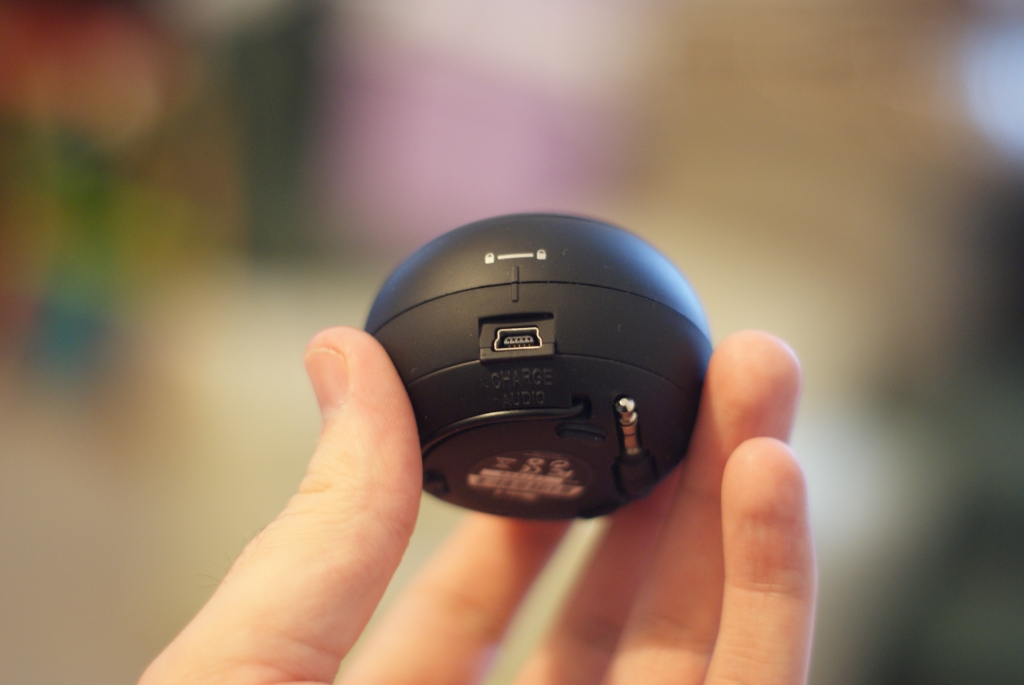 These are the best travel speakers period (in my opinion).
 Why?
1) They work with your ipod, iphone, ipad, laptop, whatever!
2) They are loud as hell (10X louder than my laptop)
3) The bass is decent
4) You can link multiple of them together. And it gets much louder.
5) They charge via USB - and last 8 HOURS!
6) They come in multiple colors
7) They are small, lightweight, and cheap... only $18!

Take 1 of these to the beach, and that's all you need.
Monday, November 5, 2012
Books To Get For Medical School + USMLE
I tried to be in concordance with recommendations in the back of First Aid 2011, surveys done by medical schools, Doctors in Training Recommendations, and feedback I have collected. Last updated June 2011.
Year 1:
Year 2:
USMLE Review:

Year 1:
Year 2:
USMLE Review:
Friday, November 2, 2012
USMLE Step 1 Review - What to choose?
Let me help you find a few options. none of these are in any particular order.
Of course, ill give you my opinion in another article after I've finished my Step 1, but you should check out these sources and decide what's best for you. By the way, most of the Question Banks have free trials, so check them out for FREE! before you buy anything.
Live Prep Lecture Courses
How to decide/What things to consider
Question Banks
Of course, ill give you my opinion in another article after I've finished my Step 1, but you should check out these sources and decide what's best for you. By the way, most of the Question Banks have free trials, so check them out for FREE! before you buy anything.
Live Prep Lecture Courses
- Kaplan High Yeild Review
- Doctors In Training
- Falcon Step 1 Review (w/ Goljan)
- Princeton Review Step 1
- Pathoma
- Pass Program (North)
- Self Study - this is also an option
- these are not all, but these are the main ones I know of
For those at SGU, Kaplan offers a special discounted course. It's the liveprep or retreat lectures either on the SGU campus or elsewhere depending on your class date. ONLY for August classes, they offer on-campus housing and an optional mealplan in May-June. If you are in the January starting classes, they have offered a discounted liveprep courses in various locations in the US. For us, they had New York, Dallas, Miami, Pasadena, and Montreal.
- USMLE WORLD
- USMLERx (w/free trial)
- Kaptest QBank (w/free trial)
- USMLE Consult (w/free trial)
- Gunner Training (w/free trial)
- NBME Self-Assessment********Estimate your Projected Score
Books
Many resources reccommend the following as MUST HAVES for step I preparation:
Many resources reccommend the following as MUST HAVES for step I preparation:
- Goljan - Rapid Review Pathology
- BRS Physiology
- High Yeild Neuroanatomy
- BRS Statitistics
- First Aid (most current edition)
- Kaplan LivePrep Lecture Notes - these are only available through taking Kaplan's LivePrep Course, however, older and current editions are being sold on EBay and are a great high yeild resource if any (according to many forums) - and perfect for self studying I've heard.
Here's a link to find these popular picks: http://doctormuggle.blogspot.com/2011/09/books-essential-for-medical-school.html
Here's the link to my Full Medical School Reccomended Books: http://doctormuggle.blogspot.com/2011/06/books-for-medical-school-usmlesgu.html
Goodluck all!
Here's the link to my Full Medical School Reccomended Books: http://doctormuggle.blogspot.com/2011/06/books-for-medical-school-usmlesgu.html
Goodluck all!
Subscribe to:
Comments (Atom)